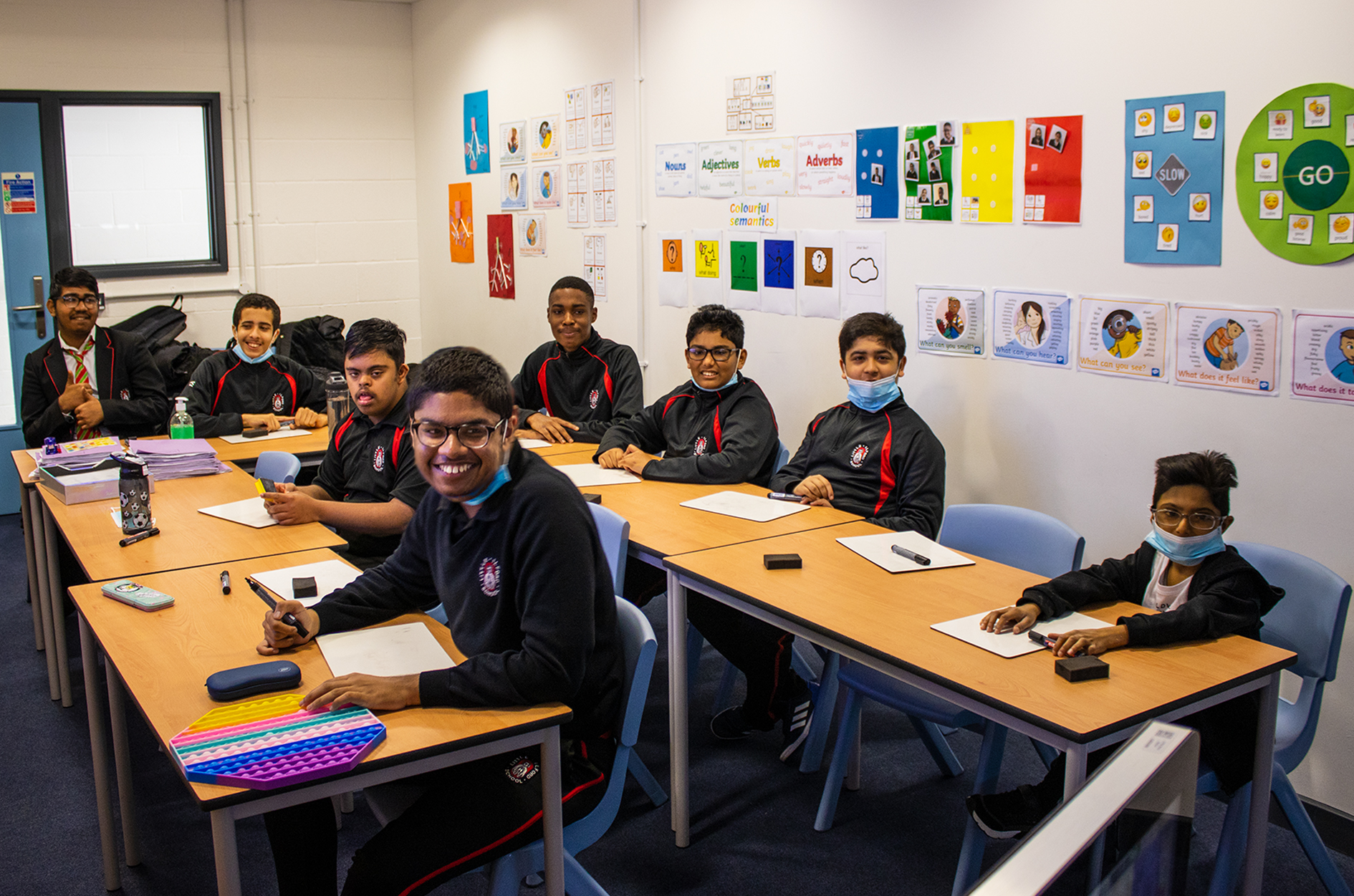
SEN Team
| NAME | ROLE | |
| J Overare | SENCO | j.overare@littleilford.org |
| J Purkiss | Deputy SENCO | j.purkiss@littleilford.org |
| T Akhtar | Head of Learning Support | t.akhtar@littleilford.org |
| H Hussain | Autism Resourced Provision Lead | h.hussain@littleilford.org |
| NAME | ROLE | |
| Z Afzal | Communications Lead (Autism Provision) | |
| L Macbeth | Teacher (Autism Provision) | |
| N Corbishley | Teacher (Autism Provision) | |
| K Kelly | Teacher (Autism Provision) | |
| M N Ahmed | Learning Support Teaching Assistant | |
| S Barker | ||
| Higher Level Teaching Assistant (Autism Provision) | ||
| J Barnett | Learning Support Teaching Assistant | |
| M Begum | Teaching Assistant (Autism Provision) | |
| A Bhogal | Higher Level Teaching Assistant (Autism Provision) | |
| T Bianchi | Learning Support Teacher | |
| M Cebrian | Learning Support Teaching Assistant | |
| N Gul | Learning Support Teaching Assistant | |
| L Harris | Teacher (Autism Provision) | |
| M Jammeh | Learning Support Teaching Assistant | |
| T Kerin | Teaching Assistant (Autism Provision) | |
| B Keser | Higher Level Teaching Assistant | |
| R Pottinger | Teaching Assistant (Autism Provision) | |
| J Priyavrathan | Learning Support Teaching Assistant | |
| R Sandhu | Learning Support Teaching Assistant | |
| L Samuels | Learning Support Teaching Assistant | |
| M Sanyang | Higher Level Teaching Assistant (Autism Provision) | |
| M Shahriyar | Teaching Assistant (Autism Provision) | |
| I Syed | Learning Support Teaching Assistant | |
| S Walker | Learning Support Teaching Assistant | |
| D Woodhead | ||
| Higher Level Teaching Assistant (Autism Provision) |
SEND Provision at Little Ilford School
The Special Educational Needs and Disabilities Team (SEND) team comprises staff with a range of skills and knowledge. The SEND team works collaboratively with pastoral teams and the behaviour support team to develop an inclusive approach to learning. Externally, the SEND team maintains strong and productive relationships with the London Borough of Newham SEN Department as well as with its specialist services. These include the Newham Sensory Service, Newham Language Communication and Interaction Service (LCIS), the Newham Educational Psychology Service, the Child and Adolescent Mental Health Service (CAMHS), the NHS and other external agencies. We seek at all times to provide the best possible holistic support for students. The team oversees Medical Care Plans and Exam Access Arrangements.
Levels of need are categorised under four main headings:
-
Communication and Interaction
-
Cognition and Learning
-
Social, Emotional and Mental Health Difficulties
-
Sensory and/or Physical Needs
Primary to Secondary Transition
To support the secondary transition process, the SEN team attends Transfer Reviews for students with EHC plans in the Summer Term prior to the student’s admission. This helps to ensure a smooth transition from Key Stage 2. Where possible the SEN team will visit year 6 students in their setting to support transition further. When required, students who need further support with transition will be invited to attend the school in the summer term.
Curriculum Overview - KS3 & KS4
Key Stage 3
At Key Stage 3, owing to the diverse range of needs of learners, some aspects of the challenge modules are taught to students in the mainstream intervention and B block groups.
Some students are unable to use traditional methods to record their work, and therefore some work is recorded using EVISENSE and/or B Squared
|
|
|
|
|
|
|
|
|
|
Key Stage 4
|
|
|
|
|
|
|
|
|
|
|
|
|
|
|
Overview
ASDAN programs of study can support the delivery of a balanced, broad and relevant curriculum. They are of benefit to the students within the school, equipping them with skills and processes that will benefit them across the curriculum and later into adult life. The programs of study provide students with those personal and social skills as well as transferable educational skills that can aid them throughout the school curriculum and later life. ASDAN creates opportunities for all students to achieve, regardless of the barriers to learning. The PSD course enables learners to gain skills with personal and social development through their achievements, thereby enhancing self-confidence, ambition and contribution to their communities. It also provides transferable skills that students can apply and use across the curriculum.
Teaching Aims
The ASDAN curriculum is designed to
- Engage, motivate and reward learners
- Make learning relevant and transferable
- Support a range of learning approaches and contexts
- Promote active learning and learning to learn
- Celebrate the diversity of multi-talented young people
- Promote spiritual, moral, social and cultural development
The ASDAN Level 1 Award in Personal and Social Development incorporates aspects of personal, social, health, citizenship and ICT, and enables candidates to develop skills that prepare them for independence and working life. It offers imaginative ways of supporting young people in becoming confident individuals who are physically, emotionally and socially healthy, being responsible citizens who make a positive contribution to society and embrace change, managing risk together with their own wellbeing, as well as introducing them to new activities and personal challenges.
PSD Units taught at Entry Level 3 and Level 1
- Community Action
- Environmental Awareness
- Food Safety in the Home and Community
- Healthy Eating
- Healthy Living
- Identity and Cultural Diversity
- Individual Rights and Responsibilities
- Making the most of Leisure Time
- Managing own Money
- Managing Social Relationships
- Parenting Awareness
- Preparation for work
- Your Money in the Future
Accessibility and Inclusion
How is the curriculum adapted to ensure all learners can access the curriculum?
- Teachers of ASDAN seek to engage learners with diverse needs to achieve meaningful learning outcomes which enable them to go on to further education, training and work, and empower them to take control of their lives.
- The courses are flexible and span a wide ability range, from pre-Entry Levels to Level 3.
- The courses can be tailored to the learner’s individual needs. ASDAN programmes and qualifications support learners at every stage of their education, meeting them at the level at which they are working, not where they are expected to be.
- ASDAN has regular assessment opportunities built into the courses. By doing this, the ASDAN curriculum encourages learners to take ownership of their learning and progress confidently towards their life outside of school.
Learner Support
|
|
The SEND department maintains strong and productive links with parent/carers throughout. Here are some links to useful websites related to SEND:
Useful Information:
Dyslexia:
ADHD
Autism
For further advice:
Newham Parent Partnership Service
The Web Building
49-51 The Broadway
Stratford
London
E15 4BQ
Tel: 0203 373 2871 ext 32871
Email: Jasweer.Sagoo@newham.gov.uk

